
History of Kawatsura Lacquerware
1193
The Kamakura period
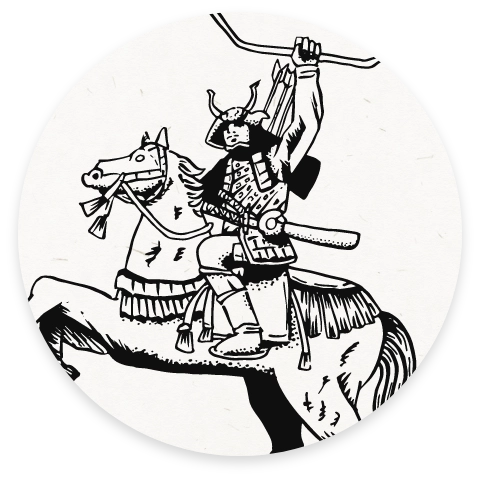
It is believed that Onodera Michinori, the younger brother of Onodera Shigemichi, the lord of Inaniwa Castle and a vassal of the shogun Minamotono Yoritomo, built a castle in Koshionojiri(now part of Odate area in Kawatsura town) and ordered his vassal to apply urushi(Japanese lacquer) to weapons such as sword scabbards, bows, and armor, thus beginning the history of Kawatsura lacquerware.
It is believed that Onodera Michinori, the younger brother of Onodera Shigemichi, the lord of Inaniwa Castle and a vassal of the shogun Minamotono Yoritomo, built a castle in Koshionojiri(now part of Odate area in Kawatsura town) and ordered his vassal to apply urushi(Japanese lacquer) to weapons such as sword scabbards, bows, and armor, thus beginning the history of Kawatsura lacquerware.
1615
Early Edo Period
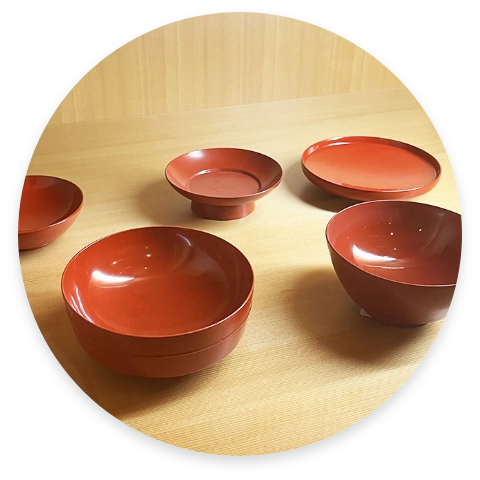
The lacquerware industry in this region began in the mid-17th century, during the Genna (1615-1624) and Genroku (1688-1704) periods. Approximately 26 households in Kawatsura village were engaged in the manufacture of bowls according to historical records.
The lacquerware industry in this region began in the mid-17th century, during the Genna (1615-1624) and Genroku (1688-1704) periods. Approximately 26 households in Kawatsura village were engaged in the manufacture of bowls according to historical records.
1815
Mid-Edo Period
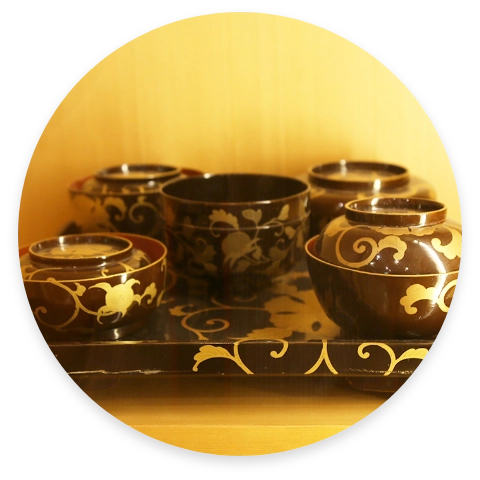
With the domain lord’s permission, Kawatsura lacquerware industry expanded its market beyond its border during the late Edo period. Under the domain’s protective policies, a wide range of lacquerware was produced, including bowls, trays, and tiered food boxes, as well as new decoration techniques such as Chinkin (embedding gold leaf into engraved patterns) and Makie (sprinkling gold or silver dust onto the lacquer painting), bolstering the industrial foundation.
With the domain lord’s permission, Kawatsura lacquerware industry expanded its market beyond its border during the late Edo period. Under the domain’s protective policies, a wide range of lacquerware was produced, including bowls, trays, and tiered food boxes, as well as new decoration techniques such as Chinkin (embedding gold leaf into engraved patterns) and Makie (sprinkling gold or silver dust onto the lacquer painting), bolstering the industrial foundation.
1868
Meiji Era
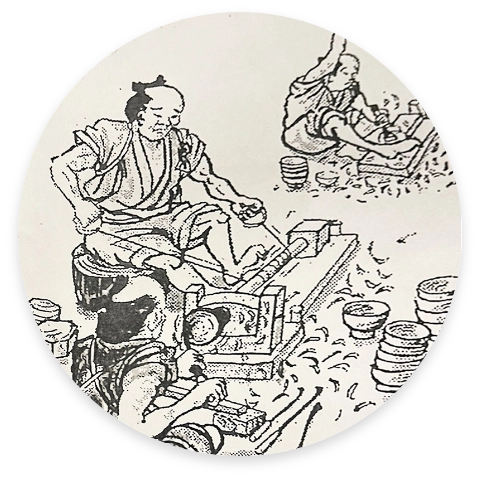
In 1869, the production value of lacquerware in Kawatsura Village was 2,000 ryo (currency of the time) according to the records of the domain. In 1896, the Kawatsura Village Lacquerware Guild was founded. The following year, the first evaluation event was held. The lathes used for making bowls were mainly “waterwheel lathes” and “foot-operated lathes”.
In 1869, the production value of lacquerware in Kawatsura Village was 2,000 ryo (currency of the time) according to the records of the domain. In 1896, the Kawatsura Village Lacquerware Guild was founded. The following year, the first evaluation event was held. The lathes used for making bowls were mainly “waterwheel lathes” and “foot-operated lathes”.
1914
Taisho to Early Showa Era
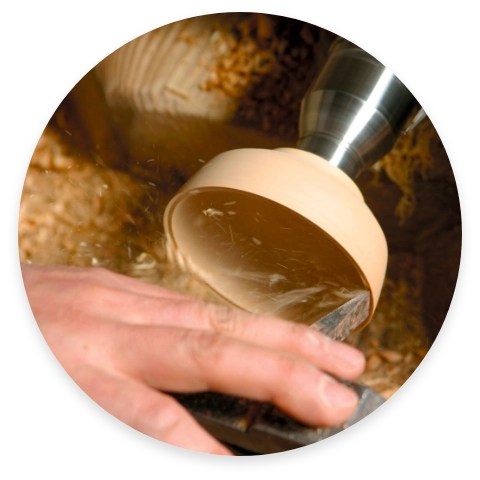
After the regional hydroelectric power company began operations, the lathe for making bowls switched to electric lathes. The Akita Prefectural Kawatsura Lacquerware Testing Center was established, leading to advancements of technical research and development. Prime Minister Saito Makoto visited the production site, bringing increased attention to the production area.
After the regional hydroelectric power company began operations, the lathe for making bowls switched to electric lathes. The Akita Prefectural Kawatsura Lacquerware Testing Center was established, leading to advancements of technical research and development. Prime Minister Saito Makoto visited the production site, bringing increased attention to the production area.
1955
The High-Growth Period
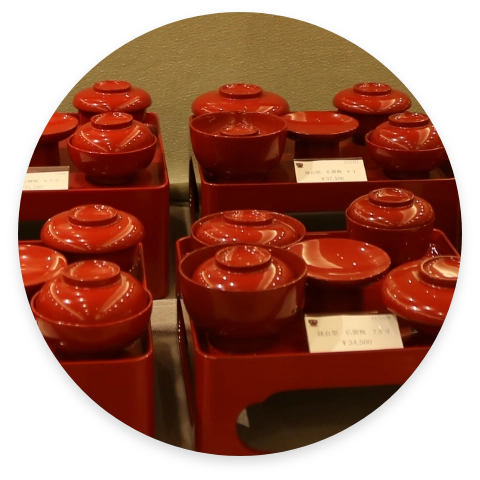
With the post-war economic recovery, soup bowls were extensively shipped to the Kanto region for everyday household use. Additionally, the shipment of trays and bowls to bustling hot spring resorts during the travel boom increased. In 1976, Kawatsura Lacquerware was designated as a national traditional craft.
With the post-war economic recovery, soup bowls were extensively shipped to the Kanto region for everyday household use. Additionally, the shipment of trays and bowls to bustling hot spring resorts during the travel boom increased. In 1976, Kawatsura Lacquerware was designated as a national traditional craft.
1996
Heisei Era
Kawatsura Laquerware was designated as a traditional craft of Akita prefecture. In 1998 and 2000, it won the Prime Minister’s Award at the National Lacquerware Exhibition. As a practical container with strong durability, it has become commonly used in everyday life, developed into a major industry in the region.
Kawatsura Laquerware was designated as a traditional craft of Akita prefecture. In 1998 and 2000, it won the Prime Minister’s Award at the National Lacquerware Exhibition. As a practical container with strong durability, it has become commonly used in everyday life, developed into a major industry in the region.

2019
Reiwa Era
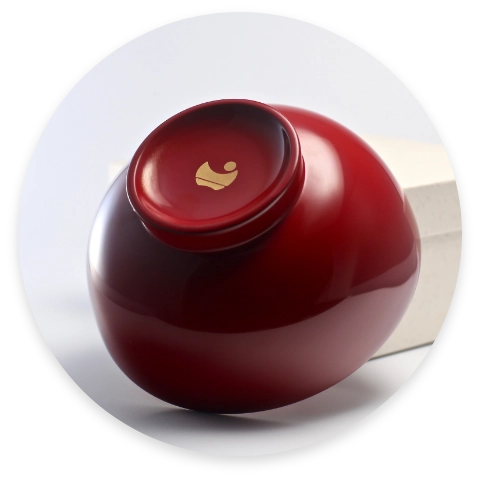
Through discussions about the definition and philosophy of Kawatsura lacquerware, with an eye towards the future of our region, we have established guiding principles for the industry and created the logo to enhance its recognition. We are now embarking on a new journey towards the next 100 years.
Through discussions about the definition and philosophy of Kawatsura lacquerware, with an eye towards the future of our region, we have established guiding principles for the industry and created the logo to enhance its recognition. We are now embarking on a new journey towards the next 100 years.

